
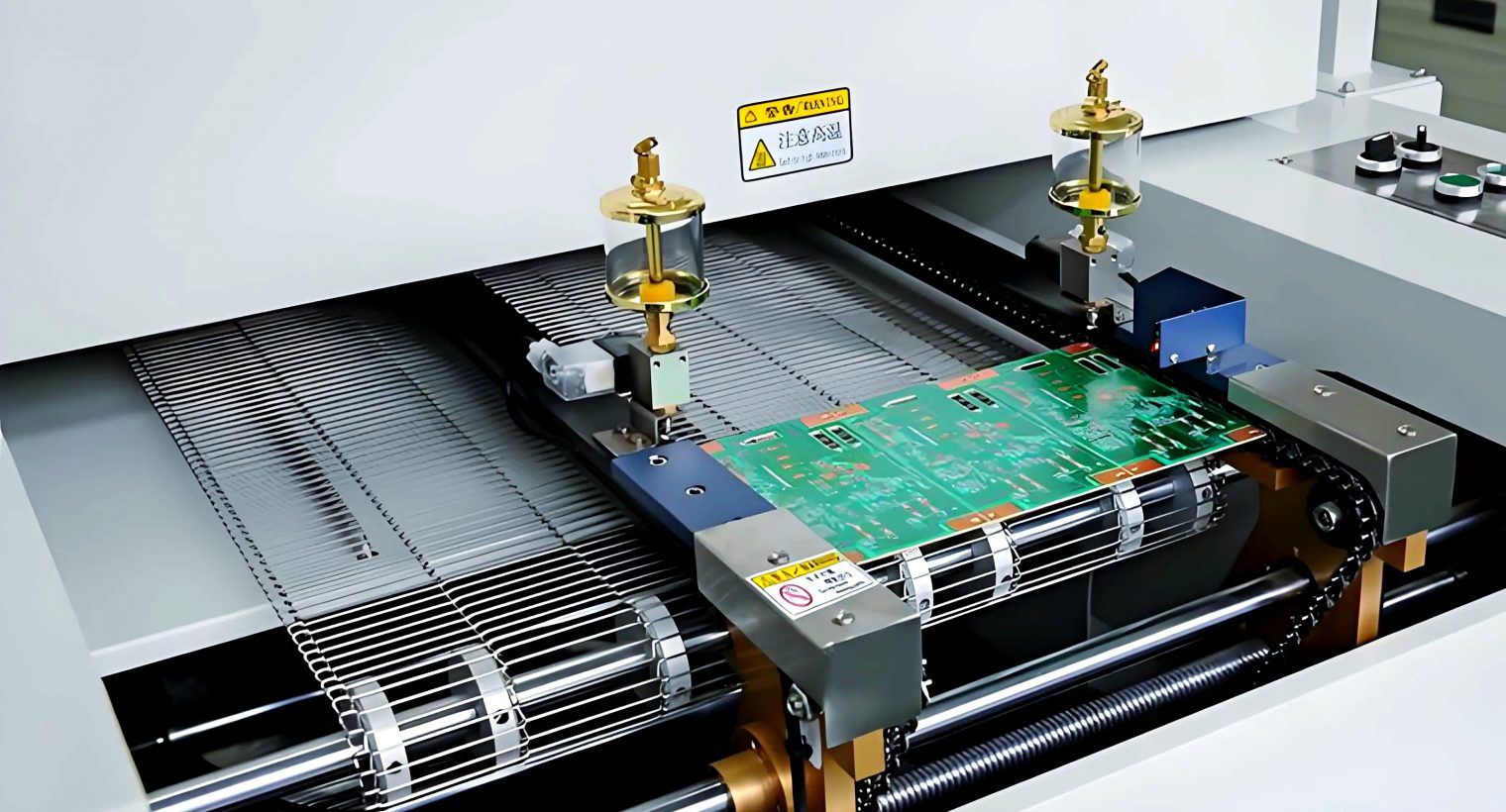
For overseas electronics manufacturers and SMT factory buyers, reflow soldering is the core process deciding product quality and yield, and a proper temperature curve is key to stable, reliable solder joints and fewer batch defects.
Wrong temperature settings lead to PCB warpage, component damage, cold/poor solder joints, higher rework costs, delayed deliveries and damaged brand reputation. This practical guide is made for foreign reflow oven buyers, helping you set standard curves fast, raise soldering pass rate and boost your product competitiveness globally.
1. 4 Key Zones of Reflow Curve (Lead-Free Standard)
Most global electronic products adopt lead-free soldering process (SAC305 solder), and the standard temperature curve is divided into 4 critical zones, with clear parameters for easy machine debugging:
Preheating Zone: Avoid Thermal Shock
Main function: Heat up PCB and components slowly, evaporate solder paste solvent, eliminate internal and external temperature difference.Key Parameters: Heating rate 1-3℃/s, final temperature 120-150℃, duration 60-90s. Strictly control the speed to prevent PCB deformation and component cracking.
Soaking Zone: Activate Flux Fully
Main function: Activate flux to remove oxide on PCB pads and component pins, balance the whole board temperature. Key Parameters: Stable temperature 150-180℃, duration 90-120s. Ensure uniform temperature across the board to avoid uneven soldering.
Reflow Zone: Form Firm Solder Joints
Main function: Melt solder completely (melting point 217℃) to realize full wetting. Key Parameters: Peak temperature 240-250℃, never exceed 255℃; time above melting point 40-60s. This ensures full, solid solder joints without damaging components.
Cooling Zone: Solidify Solder Quickly
Main function: Cool down rapidly to form dense, high-strength solder joints. Key Parameters: Cooling rate -1 to -4℃/s, cool to below 100℃ before discharge. Avoid slow cooling which weakens joint strength or rapid cooling causing board stress.
Warm Tips for Foreign Buyers: For lead soldering process, lower peak temperature to 230-240℃ and shorten melting time; do not mix lead and lead-free parameters on one machine.
2. 3 Quick Steps to Set Temperature Curve
Step 1: Confirm Product Basics
Clarify core information before debugging: solder type (lead-free/lead), PCB thickness/size, component type (normal SMD, BGA, heat-sensitive parts), product application (consumer electronics, automotive, industrial). Adjust accordingly for thick PCBs, precision parts or high-reliability products.
Step 2: Set Basic Machine Parameters
Set the 4 zones parameters step by step on your reflow oven, follow the standard lead-free values we provide, avoid random adjustments to ensure smooth process connection.
Step 3: Test & Optimize with Profiler
Use a reflow profiler to test actual temperature at key positions (PCB center, edge, BGA area). Correct the curve based on test results: raise reflow temp or extend melting time for cold joints; adjust heating rate for solder balls.
3. Critical Mistakes to Avoid for Overseas Production
- Over-fast Heating: Causes PCB warpage and component damage, keep rate ≤3℃/s.
- Over-high Peak Temp: Burns chips and delaminates PCB, never exceed 255℃ for lead-free.
- Insufficient Melting Time: Leads to virtual/cold joints, easy product failure.
- Slow Cooling: Reduces solder joint strength and product service life.
4. Optimization Tips for Special Scenarios
For BGA/QFP precision components: slow down heating/cooling rate, extend soaking time; For thick/multi-layer PCBs: raise preheating temp for even heating; For heat-sensitive parts: lower peak temp to ≤240℃; For automotive/ high-end products: strictly control parameter tolerance and increase test frequency.
Conclusion
There is no universal reflow temperature curve, only a curve matching your products and process can guarantee reliable soldering. Master these parameter settings and avoid common mistakes, you can greatly improve production yield, cut rework costs and meet international quality standards for your exported electronic products.
If you need targeted curve suggestions for your reflow oven model or product type, feel free to contact us for professional support!
About this supplier:
Our company QiHe Electrical Technology Co.,LTD is a high-tech company,which located in Economic Development Zone, Yueqing,China. We do more than 10 years experience in original designing and producing small desktop PnP machine,benchtop PnP machine and vertical type PnP machine. All of them are widely applied for all levels of PCB and LED assembly .
Know more about us :https://www.qhsmt.com/about-qihe-smt-equipment/
Follow us on social media: https://www.facebook.com/Qihesmt/
E-mail: sales4@qihekj.com
 English
  Chinese
Comments are closed.