
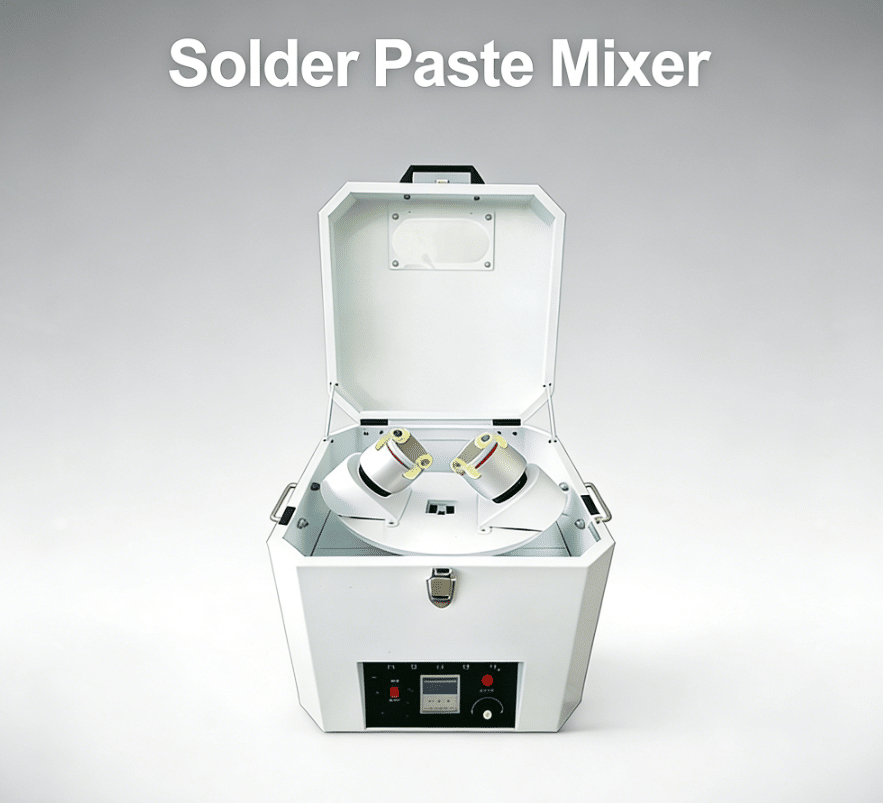
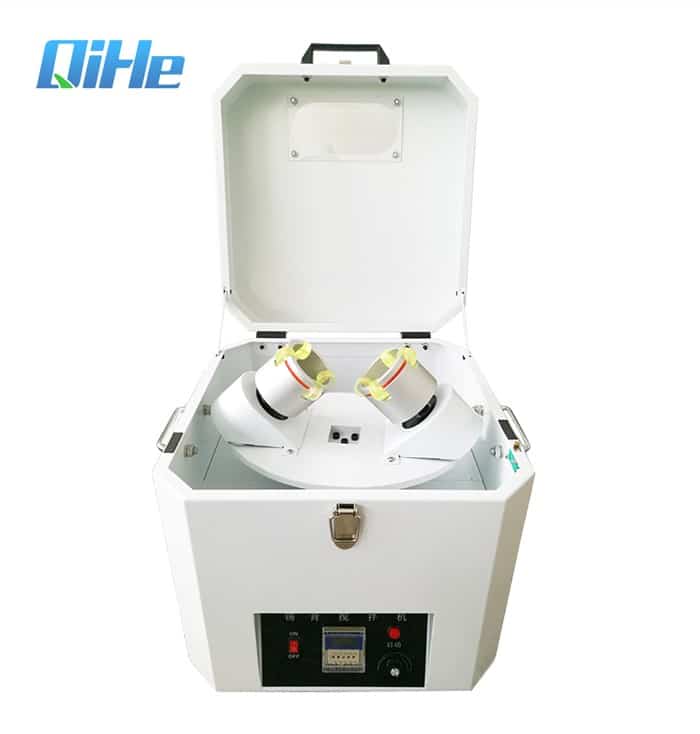
Surface Mount Technology (SMT) has become the backbone of modern electronics manufacturing, driving the production of everything from tiny smartphone components to complex industrial controllers. While high-speed placement machines and precision printers often steal the spotlight, there’s a quiet workhorse that lays the groundwork for flawless soldering: the solder paste mixer. In this post, we’ll uncover the critical role of solder paste mixers, from how they work to what to look for when choosing one, and share pro tips for getting the best results.
First, let’s understand why solder paste mixing is non-negotiable. Solder paste is a vital medium in SMT, composed of solder alloy particles and flux. During storage and transportation, the dense alloy particles tend to settle at the bottom of the container, while the lighter flux rises to the top. This separation can lead to uneven soldering, such as cold joints, insufficient wetting, or even solder balling—all of which compromise the integrity of electronic assemblies. A high-quality solder paste mixer eliminates this separation by thoroughly blending the alloy particles and flux, ensuring a homogeneous mixture that guarantees consistent soldering results.
Now, let’s break down how a solder paste mixer works. Most modern solder paste mixers operate on the principle of planetary mixing. This mechanism involves two types of motion: the mixing bowl rotates around a central axis, and at the same time, the mixing paddles rotate on their own axes. This dual motion creates a strong shearing and stirring force that effectively breaks up any agglomerated particles and distributes the flux evenly throughout the solder paste. Unlike manual mixing, which is labor-intensive, inconsistent, and prone to introducing air bubbles (another enemy of good soldering), planetary mixers ensure a uniform, bubble-free mixture every time. Some advanced models also come with vacuum mixing capabilities, which further removes air bubbles and enhances the paste’s printability and soldering performance.
When selecting a solder paste mixer for your SMT line, there are several key features to consider. First, mixing capacity is critical—it should match your production volume. Small-scale operations may opt for tabletop models with a capacity of 50g to 500g, while large-scale factories might need industrial-grade mixers that can handle 1kg or more. Second, mixing speed and time adjustability are essential. Different types of solder paste (e.g., lead-free vs. leaded, fine-pitch vs. standard) require specific mixing parameters, so a mixer with adjustable settings allows for flexibility. Third, vacuum functionality is a valuable addition, especially for high-precision applications like automotive electronics or medical devices, where soldering defects can have severe consequences. Fourth, ease of use and cleaning should not be overlooked. A mixer with a user-friendly interface and detachable parts simplifies operation and maintenance, reducing downtime.
To get the most out of your solder paste mixer, follow these best practices. First, always allow the solder paste to reach room temperature before mixing—this reduces viscosity and ensures better blending. Mixing cold paste can lead to incomplete mixing and air entrapment. Second, follow the manufacturer’s recommended mixing time and speed for the specific solder paste you’re using. Over-mixing can degrade the flux, while under-mixing leaves the paste unhomogeneous. Third, clean the mixer thoroughly after each use to prevent cross-contamination between different types of solder paste. Residue from previous mixes can alter the properties of the new paste, leading to soldering issues. Fourth, regularly inspect and maintain the mixer’s components, such as paddles and seals, to ensure optimal performance and longevity.
In conclusion, the solder paste mixer is an indispensable tool in SMT production. It ensures the consistency and quality of solder paste, which directly translates to reliable electronic assemblies. By understanding its importance, working principle, and key features, and by following best practices for use and maintenance, you can maximize the efficiency of your SMT line and minimize soldering defects. Don’t underestimate the power of this small but mighty machine—it’s the foundation of a successful soldering process.
 English
  Chinese
Comments are closed.