
Confused about picking a benchtop SMT pick and place machine? We break down key specs, common pitfalls and real factory experience for small-batch PCB assembly.
Benchtop SMT pick and place machines have become the go-to choice for small electronics workshops, prototype labs and low-volume PCB assembly. Many of our customers come to us after buying cheap machines from other suppliers. Most of them end up stuck with inconsistent component placement, or lose hours every single day clearing feeder jams.
If you are building a small SMT line for prototypes or limited batch runs, there are a few practical points you need to check before placing your order.
Start with the range of components you plan to assemble. Some desktop mounters can only handle 0805 and larger parts. If your PCB uses tiny 0402 resistors, LEDs or fine-pitch QFN chips, you must verify the machine’s vision system can reliably pick these small packages. We’ve seen customers receive their machine, only to find it cannot recognize those tiny components. By then, return or upgrade options are costly and slow.
Next, look at placement heads and feeder slot count. Multi-head machines boost production speed, but more heads also add maintenance work. For most small factories running 1,000 to 5,000 boards monthly, a 4-head or 6-head benchtop model hits the sweet spot. There is no need to buy an expensive 8-head high-speed machine if your daily output stays low. You will just pay extra for features you will never really use.
Rail transport is another easy-to-miss detail. A conveyor rail enables continuous PCB loading, cutting down manual work compared with simple fixture plates. When you frequently switch between different board sizes, adjustable rail width can drastically reduce your setup time between jobs.
Feeder reliability can make or break your whole assembly line. Low-cost tape feeders jam constantly. Every jam halts production, wastes parts and eats into your working hours. When comparing different machine brands, always ask about feeder replacement cost and delivery lead time. Those cheap feeders look attractive at first glance, but unexpected downtime costs far more in the long run.
We get plenty of questions about machine software. Simple, intuitive software matters a lot for your operators. Overly complex proprietary software requires long training sessions, and becomes a real headache when your staff leave the company. A good desktop mounter should support Gerber file import, quick edits to your part library and straightforward vision calibration.
After-sales support is the biggest risk for overseas buyers. Some vendors sell equipment and only reply via slow emails. When motion or vision issues pop up, waiting weeks for technical guidance will delay your customer orders. Go with suppliers who offer remote video troubleshooting and reliable spare parts supply.
Final thoughts
Benchtop SMT pick and place machines are not universal. The right machine depends on your PCB dimensions, component types, monthly output and budget. Do not focus only on the price. Before finalizing your purchase, test pickup accuracy, feeder stability and software usability.
If you have questions about your PCB project, send over your BOM and board size. We can help you figure out which desktop chip mounter matches your assembly requirements.
qihekj@126.com
www.qihesmt.com
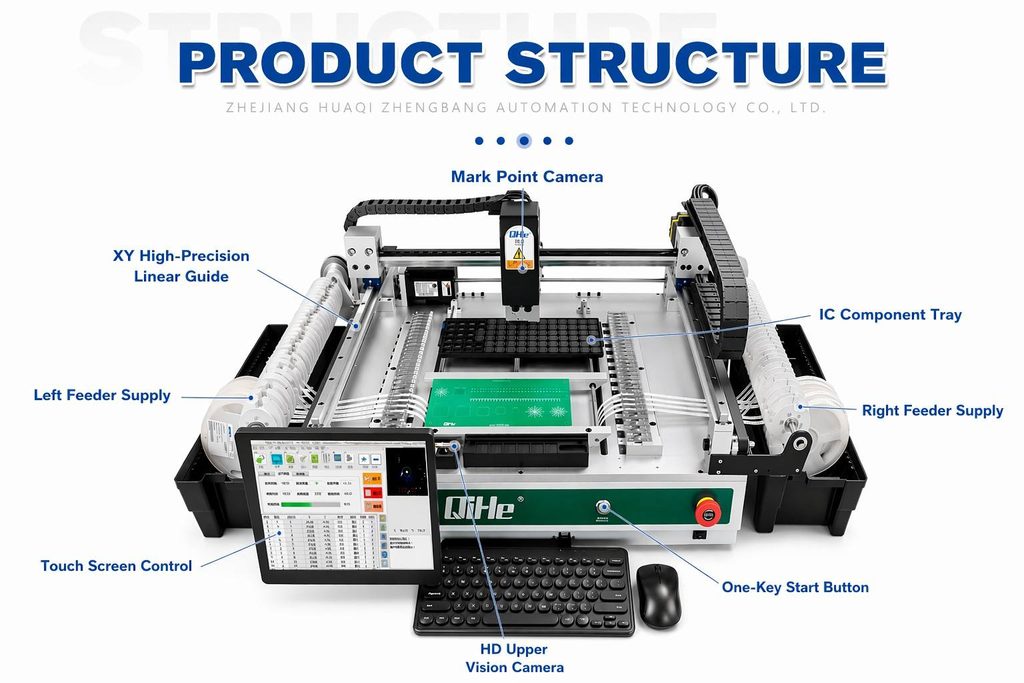
TVM802BP benchtop SMT pick and place machine for small PCB assembly English
  Chinese